Making a difference by Eddie Osborne

For those hearing me for the first time you should know I don’t write fiction or poetry, nor am I a guitar player and most certainly not a singer.  What I do is write personal essays about issues that are important to me, and this evening’s subject is “making a difference.”

Eddie Osborne, writer and story teller.

  An internet search for the phrase resulted in having 30,300,000 resources at my fingertips.  I discovered there are local, state, national and international organizations dedicated to that very cause.  There are agnostic, atheist, Buddhist, Christian, Hindu, Islamic, Jewish and Unitarian groups striving to achieve that goal.  Youth, adults and the elderly are working toward that purpose.  There are stories, poems, songs, quotes and plenty o’ platitudes dedicated to that very principle.  And my talk has nothing to do with any of those things…….As I started working on this presentation, I soon realized the title might sound a bit presumptuous.  Please note my talk is not intended to be a life lesson and it’s certainly not a lecture.   There are no exercises designed to show how one can make a difference.  I’ll be sharing how my life experiences have shaped my views, my values and how I choose to treat others.

As I look back over the past 74 years, 2 months and 28 days, I remember the people who’ve made a difference in my life.  I think of my parents whose firm, but nurturing ways shaped me.    I’m not saying they were without faults, but the greatest lesson I learned from them was I can only take credit for what I do right if I take responsibility for what I do wrong.   Their influences taught me the lessons of humility, respect and acceptance that are at the very core of who I try to be.

I think of grandparents, aunts and uncles, teachers and others whose gentle decency and quiet dignity modeled behavior I strive to emulate.  On the other side of the coin there are those whose behavior taught me to go in a different direction.  I am truly thankful for each….there’s something to be said for yin yang. 

I’m convinced my life has been shaped by my interactions with others.  From parents, siblings and extended family to friends, from long-term relationships to chance encounters the opportunity for spiritual and emotional growth is ever constant.  For me it’s a matter of being in the moment and recognizing the gifts the universe gives me.  Does that happen all the time?  A short answer is no but when it does, for me it’s the coolest, the hippest, the greatest and the most wonderful thing in the world.

From time to time the universe gives me just such a gift.  Last month I had a table at our community’s art walk I called “The Art of Conversation.”  That day I greeted 55 people and had 8 conversations with folks I was meeting for the first time and 6 conversations with folks I know.  I’m pleased to say each and every conversation was wide ranging, cordial and certainly made a positive difference for me.  It also brought to mind another brief but nonetheless profound & genuine experience of several years ago. 

I think the patron saint of serendipity was smiling on me when I crossed paths with a married couple from Saudi Arabia.   Hafiz (from Jordan) and Heyam (from Palestine) are about my age and are the parents of five children (all college educated) who travel a few months out of the year.  We connected because we welcomed one another in the spirit of acceptance and respect.  We spoke of family, friends and how our similarities are far more important than any perceived differences.  Heyam spoke lovingly of how it was the first Eid she and her youngest daughter had been apart and how much she missed her.  I remember Hafiz being both surprised and genuinely touched that I knew the first Eid came after Ramadan.   We celebrated our connection in the most modern of ways.  We friended one another on Facebook. 

From time to time, I have periods of what I call “tion”.  Now before you think I’m making up a new word I offer the following explanation…You see, over the years I’ve found I need periods of reflection, introspection and contemplation.  Most recently it’s been about why I want to make a difference and how I can make a difference.  My journey of self-discovery is intensely personal, profound and it’s a gift that keeps on giving.

The reason I want to make a difference is simply because I want it to be my legacy.  Is it a matter of ego?  Of course, it is and frankly I’m ok with that.  It’s not about anyone remembering my name.  You see I have the hope that if I treat folks with respect and kindness perhaps it just might create a self-perpetuating cycle of positive connections.  It might not happen, but I believe it’s worth the effort.  Now the question is how I do make a difference.  Well, there’s the old standby “kindness begets kindness”, the more modern “pay it forward” but for me it’s simply because I think it’s the right thing to do. I also like the feeling it evokes.

I recognize the fact that one can make a difference by doing all matter of things.  For some it’s making a financial contribution or serving on a committee for others it might be gathering to support or protest.   How anyone chooses to make a difference is a matter of personal choice.

I’d like to share a quote from an author who in my humble opinion balances the profound with the profane in a most entertaining and enlightening way.  From the late Tom Robbins’ novel  “Still life with woodpecker” I offer the following….

The word that allows yes, the word that makes no possible.
The word that puts the free in freedom and takes the obligation out of love.
The word that throws a window open after the final door is closed.
The word upon which all adventure, all exhilaration, all meaning, all honor depends.
The word that fires evolution’s motor of mud.
The word that the cocoon whispers to the caterpillar.
The word that molecules recite before bonding.
The word that separates that which is dead from that which is living.
The word no mirror can turn around.
In the beginning was the word and that word was
CHOICE

Now the question before me is how in the world do I make a difference?  Recycling?-yep, contributions?-when I can afford it, gathering to support?-most certainly, gathering to protest?-nah, not so much, voting?-oh hell yes, politicking?-not my style.  However, I manifest my values is gloriously and wonderfully my choice.   For me it’s simply about treating folks in the manner I want to be treated.  For me there’s no better feeling than when my values and behavior align.

How did I arrive at this point in my life?  Well, trial & error, blind luck, tragedy & triumph, magic & mojo, chutzpah and serendipity have all played a part. I find a certain sense of peace in accepting the fact if I can’t be a good example I might at least serve as a horrible warning.

Are there books and workshops that could provide me with techniques, strategies and prescribed courses of action to facilitate making a difference?   I’m sure there are but I choose not to look for them.  I say that because I’m not entirely confident that what I do makes a difference but I certainly want try. One might ask how I intend to make a difference.  My intent is to foster a culture of respect and to conspire on behalf of kindness.  I’m convinced I can make a difference by actively listening, being emphatic, but most of all being genuine.

Now am I so naïve that I believe this works all the time?  I most certainly am not. Frankly there are some who pose a challenge to my desire to live and let live.  I think we’ve all encountered folks who view others with disdain.  While I’d likely not say so I do believe such behavior is best described as bovine excrement.  My response to such situations runs through the filter of confidence (or lack of confidence) I feel at the time.  While I might feel righteous indignation, I try my best to not respond in kind. Is that effective? I’m not sure but I choose a path of civil discourse over rancor and bombast.   You see my conscience requires I live my values.

I believe courtesy, good manners, and genuine good will make a difference.   I know following the golden rule in all its’ iterations makes a difference.  I’m convinced respect makes a difference.  I hope to make a difference. 

Thanks for indulging me.

VERSION ESPAÑOL

Haciendo la diferencia por Eddie Osborne

Para quienes me escuchan por primera vez, deben saber que no escribo ficción ni poesía, tampoco soy guitarrista y ciertamente no soy cantante. Lo que hago es escribir ensayos personales sobre temas que son importantes para mí, y el tema de esta noche es “hacer la diferencia.”
Una búsqueda en internet sobre esa frase me arrojó 30,300,000 resultados al alcance de mis dedos. Descubrí que existen organizaciones locales, estatales, nacionales e internacionales dedicadas a esa misma causa. Hay grupos agnósticos, ateos, budistas, cristianos, hindúes, islámicos, judíos y unitarios trabajando para lograr ese objetivo. Jóvenes, adultos y ancianos contribuyen con esa finalidad. Hay historias, poemas, canciones, citas y una buena cantidad de lugares comunes dedicados a ese principio. Y mi escrito no tiene nada que ver con nada de eso…

Al comenzar a trabajar en esta presentación, me di cuenta de que el título podría sonar algo presuntuoso. Por favor, sepan que mi escrito no pretende ser una lección de vida y ciertamente no es una cátedra. No hay ejercicios diseñados para mostrar cómo uno puede marcar la diferencia. Lo que compartiré es cómo mis experiencias han moldeado mis opiniones, mis valores y cómo decido tratar a los demás.

Al mirar hacia atrás en estos 74 años, 2 meses y 28 días, recuerdo a las personas que marcaron una diferencia en mi vida. Pienso en mis padres, cuya firmeza y ternura me formaron. No digo que fueran perfectos, pero la mayor lección que aprendí de ellos fue: solo puedo atribuirme el mérito de lo que hago bien si asumo la responsabilidad de lo que hago mal. Sus enseñanzas me inculcaron humildad, respeto y aceptación, principios que son la esencia de quien intento ser.

Pienso en abuelos, tías y tíos, maestros y otros cuya decencia silenciosa y dignidad serena me mostraron conductas que intento emular. Y en el otro extremo, también hubo quienes me enseñaron, a través de su comportamiento, el camino que no quería seguir. Estoy agradecido por cada uno… hay algo que decir sobre el yin y el yang.

Estoy convencido de que mi vida ha sido moldeada por mis interacciones con los demás. Desde la familia hasta las amistades, desde relaciones duraderas hasta encuentros fugaces, siempre existe la oportunidad de crecer espiritual y emocionalmente. Para mí, se trata de estar presente y reconocer los regalos que el universo me ofrece. ¿Ocurre todo el tiempo? La respuesta corta es no, pero cuando sucede, para mí es lo más padre, lo más significativo y lo más maravilloso del mundo.

De vez en cuando, el universo me regala uno de esos momentos. El mes pasado tuve una mesa en la feria artística de nuestra comunidad llamada “El Arte de Conversar.” Ese día saludé a 55 personas, tuve 8 conversaciones con desconocidos y 6 con gente que conozco. Me complace decir que cada conversación fue amplia, cordial y marcó una diferencia positiva para mí. También me hizo recordar otra experiencia breve pero profunda de hace muchos años.

Creo que el santo patrón de la serendipia sonreía cuando me crucé con una pareja de Arabia Saudita. Hafiz (de Jordania) y Heyam (de Palestina) tienen más o menos mi edad y son padres de 5 hijos (todos profesionistas). Viajan unos meses al año. Nos conectamos porque nos dimos la bienvenida mutuamente con aceptación y respeto. Hablamos de la familia, amistades y cómo nuestras similitudes son mucho más importantes que cualquier diferencia percibida. Heyam me habló con ternura de lo mucho que extrañaba a su hija menor en su primer Eid separadas. Recuerdo que Hafiz se sorprendió y conmovió genuinamente al saber que yo sabía que el primer Eid ocurre después de Ramadán. Celebramos nuestra conexión de la forma más moderna posible: nos hicimos amigos en Facebook.

A veces tengo periodos que llamo de “ción.” Y antes de que piensen que me lo inventé, ofrezco esta explicación… A lo largo de los años he aprendido que necesito momentos de reflexión, introspección y contemplación. Últimamente ha sido sobre por qué quiero hacer la diferencia y cómo puedo hacerlo. Mi viaje de autodescubrimiento es profundamente personal, revelador y es un regalo que sigue dando.

¿La razón por la que quiero marcar la diferencia? Simplemente porque quiero que sea mi legado. ¿Es cuestión de ego? Claro que sí, y francamente estoy bien con eso. No se trata de que recuerden mi nombre. Mi esperanza es que, al tratar a las personas con respeto y amabilidad, quizás se cree un ciclo de conexiones positivas. Tal vez no ocurra, pero creo que vale la pena el intento. Y ahora la pregunta es: ¿cómo hago la diferencia? Hay una frase conocida “la amabilidad genera amabilidad” o lo más moderno “haz el bien sin mirar a quien,” pero para mí es porque simplemente creo que es lo correcto. Además, me gusta cómo me hace sentir.

Reconozco que uno puede hacer la diferencia de muchas maneras. Para algunos es donar dinero, formar parte de comités, para otros es reunirse para apoyar una protesta. Lo que cada quien decide hacer es algo personal.
Quiero compartir una cita de un autor que, en mi opinión, equilibra lo profundo y lo profano de una forma entretenida e iluminadora. Del fallecido Tom Robbins, en su novela Still Life with Woodpecker, les comparto:

La palabra que permite el “sí”, la palabra que hace posible el “no.”
La palabra que pone la libertad en la libertad y quita la obligación del amor.
La palabra que abre una ventana tras la última puerta cerrada.
La palabra sobre la cual dependen toda aventura, toda emoción, todo significado, todo honor.
La palabra que enciende el motor evolutivo del barro.
La palabra que el capullo susurra a la oruga.
La palabra que recitan las moléculas antes de unirse.
La palabra que separa lo muerto de lo vivo.
La palabra que ningún espejo puede revertir.
En el principio fue la palabra y esa palabra fue
ELECCIÓN

Ahora la pregunta ante mí es: ¿cómo hago la diferencia? ¿Reciclando? sí, ¿donando? cuando puedo, ¿apoyando a un grupo? sin duda, ¿protestando? no tanto, ¿votando?  por supuesto, ¿haciendo campaña? no es lo mío. La forma en que manifiesto mis valores es gloriosa y maravillosamente mi elección. Para mí, simplemente se trata de tratar a los demás como quiero que me traten. No hay mejor sensación que cuando mis valores y mi conducta se alinean.

¿Cómo llegué a este punto en mi vida? Pues… prueba y error, suerte ciega, tragedia y triunfo, magia y “poder mágico”, seguridad en mí mismo y serendipia, todo influyó. Encuentro paz en aceptar que, si no puedo ser un buen ejemplo, al menos puedo servir como una advertencia terrible.

¿Existen libros y talleres que me den técnicas y estrategias para marcar la diferencia? Seguro que sí, pero elijo no buscarlos. Digo esto porque no estoy completamente seguro de que lo que haga marque la diferencia… pero sin duda quiero intentarlo. ¿Cómo pienso hacerlo? Mi intención es fomentar una cultura de respeto y conspirar a favor de la amabilidad. Estoy convencido de que puedo marcar la diferencia al escuchar activamente, ser empático y, sobre todo, ser yo.

¿Soy tan ingenuo como para pensar que esto siempre funciona? Definitivamente no. Francamente, hay personas que desafían mi deseo de vivir y dejar vivir. Todos hemos conocido a quienes ven a otros con desprecio. Aunque no lo diga, creo que ese comportamiento se describe mejor como “caca de vaca.” Mi respuesta a tales situaciones pasa por el filtro de la confianza (o falta de ella) que sienta en ese momento. Aunque sienta indignación justa, trato de no responder del mismo modo. ¿Funciona? No lo sé, pero elijo el camino del diálogo civil sobre el del rencor y la arrogancia. Mi conciencia me exige vivir de acuerdo con mis valores.

Creo que la cortesía, los buenos modales y la buena voluntad genuina marcan la diferencia. Sé que seguir la regla de oro, en todas sus versiones, hace la diferencia. Estoy convencido de que el respeto hace la diferencia. Espero poder hacerla.

Gracias por permitirme compartir esto.

Cheddar cheese is a big lie!

Lately, I’ve heard the word “Taco” being used as an acronym. As an American, I find it funny. But as a Mexican, it offends me that something so deeply symbolic of my native culture is being used to describe someone whose values are completely opposed to what tacos represent.                                                                                                                                                                              But instead of getting upset, I would like to take this opportunity to tell you about the real tacos we all love.

According to historycooperative.org, “the invention of tacos cannot be attributed to a single individual or moment in history. Instead, tacos are a culinary creation that evolved over centuries, primarily within the indigenous cultures of Mexico, long before Spanish colonization.”
Some linguists believe the word comes from the Nahuatl word tlahco, which means “half” or “in the middle,” referring to the way a taco is formed.

There are many kinds of tacos. In my experience, we have Mexican tacos and American tacos—both delicious in their own way, but very different.
When I moved to the U.S., eating tacos at Taco Bell was a big cultural shock. I had never seen crunchy tacos or tacos made with ground beef. In fact, in my 26 years living in the U.S., I have eaten at Taco Bell about five times, and I got sick twice. Sorry Taco Bell lovers.

In Mexico, we only eat soft tacos. The crunchy ones are called flautas. We also have quesadillas, which can be soft or crunchy, and tostadas—a flat, crispy tortilla topped with similar ingredients to tacos.
If you want ground beef in a taco, we use picadillo, which is ground beef cooked with potatoes and carrots in tomato sauce made with fresh ingredients like onion, garlic, and herbs.

You might know street tacos, but we also have tacos rojos or red tacos made with tortillas soaked in red salsa and oil but not crunchy. They can be filled with beans, cheese, shredded beef, mashed potatoes, picadillo, and more, and are topped with lettuce and queso fresco, never cheddar cheese!

Mexican tacos are always made with corn tortillas. When we use flour tortillas, they are usually called gringas or burritos, more commonly found in northern Mexico.

We also have adventurous tacos you can find in farmers markets, as well as expensive restaurants, like brain tacos called cesos, cow or pork blood tacos called moronga, bull or pork testicle tacos called criadillas, cow intestine tacos called tripas, or grasshopper tacos. But if you are vegetarian, you can have quesadillas or tacos made with pumpkin flowers and cheese. All these are just some of the tacos Mexico has.

As you can see, Mexican tacos are as rich, diverse, and vibrant as the Mexican culture itself.

So, about that acronym…

Our tacos are about community, flavor, tradition, and joy; not division, hate, or stereotypes. Let’s honor them for what they are, a beautiful gift from our culture to the world!

TRADUCCION AL ESPAÑOL

Últimamente he escuchado que la palabra “Taco” se está usando como acrónimo. Como estadounidense, me parece chistoso, como mexicana, me ofende que algo tan simbólico de mi cultura nativa esté siendo utilizado para representar a alguien que se opone a lo que los tacos representan.
Pero en lugar de enojarme, me gustaría aprovechar esta oportunidad para hablar sobre los verdaderos tacos que a todos nos encanta.

Según historycooperative.org, “la invención del taco no puede atribuirse a una sola persona o a un momento específico en la historia. En cambio, los tacos son una creación culinaria que evolucionó a lo largo de los siglos, principalmente dentro de las culturas indígenas de México, mucho antes de la colonización española.”

Algunos lingüistas creen que la palabra proviene del náhuatl tlahco, que significa “mitad” o “en el medio”, en referencia a la forma del taco.

Hay muchos tipos de tacos. En mi experiencia, tenemos tacos mexicanos y tacos estadounidenses, ambos deliciosos a su manera, pero muy diferentes.

Cuando me mudé a los Estados Unidos, comer tacos en Taco Bell fue un gran choque cultural. Nunca había visto tacos crujientes o tacos hechos con carne molida de esa manera. De hecho, en mis 26 años viviendo en Estados Unidos, he comido en Taco Bell unas 5 veces, y me enfermé 2. A los que aman Taco Bell, lo siento.

En México, solo comemos tacos blandos. Los crujientes se llaman flautas. También tenemos quesadillas, que pueden ser blandas o crujientes, y tostadas, que son tortillas planas y crujientes cubiertas con ingredientes similares a los de los tacos.

Si quieres carne molida en un taco, usamos picadillo, que es carne molida cocinada con papas y zanahorias en una salsa de tomate hecha con ingredientes frescos como cebolla, ajo y hierbas.

Tal vez conozcas los tacos callejeros, pero también tenemos tacos rojos, hechos con tortillas remojadas en salsa roja y aceite, pero no crujientes. Se pueden rellenar con frijoles, queso, carne deshebrada, puré de papa, picadillo, y más, y se cubren con lechuga y queso fresco —¡nunca queso cheddar!

Los tacos mexicanos siempre se hacen con tortillas de maíz. Cuando usamos tortillas de harina, generalmente se llaman gringas o burritos, más comunes en el norte de México.

También tenemos tacos más exóticos que se encuentran en mercados o restaurantes de lujo, como los tacos de sesos, tacos de moronga (sangre de res o cerdo), tacos de criadillas (testículos de toro o cerdo), tacos de tripas, o tacos de chapulines. Pero si eres vegetariano, puedes comer quesadillas o tacos de flor de calabaza con queso. Todos estos son solo algunos ejemplos de los muchos tacos que hay en México.

Como puedes ver, los tacos mexicanos son tan ricos, diversos y vibrantes como la cultura mexicana misma.

Así que, sobre ese acrónimo…

Nuestros tacos son sobre comunidad, sabor, tradición y alegría; no sobre división, odio o estereotipos. ¡Honrémoslos por lo que son: un hermoso regalo de nuestra cultura para el mundo!

¿La verdad importa?


Hoy lunes 20 de enero del 2025, un día de muchas contradicciones en los Estados Unidos. Por un lado, está fecha está dedicada al Dr. Martin Luther King Jr. quien fue un activista social, un líder ejemplar afroamericano que luchó por los derechos de los ciudadanos en los años 60s.  Uno de los personajes más icónicos de la historia del movimiento de los derechos civiles y la lucha por la igualdad de condiciones.

Dr. Martin Luther King Jr.

Y por el otro, la toma de protesta de uno de los presidentes más racista y corrupto de este país. Alguien a quien no solo la mitad de pueblo norteamericano detesta, si no también muchos países del mundo entero.

Y para quienes piensan que ganó con un amplio margen, aquí están los números. Kamala Harris obtuvo el 48.3% de los votos, los candidatos independientes el 1.7% que suma exactamente el 50 % con los 2 juntos. Así de demuestra que la mitad del país decidió poner a un criminal convicto y corrupto a dirigir la potencia más poderosa del mundo en una de las elecciones más cerradas de la historia.

Foto oficial 2025

No voy a basar mis comentarios en la vida personal de este señor, porque muchos de sus seguidores dicen que votaron por él por cuestiones que no tienen que ver con su vida privada, ya saben eso de que les ha puesto el cuerno a todas sus esposas o que ha defraudado el fisco, o que es un mentiroso compulsivo. ֵ¡No! Me voy a basar en la política solamente.

Muchos de los que no votamos por él, estamos decepcionados, dolidos y asustados porque, aunque él lo negó durante su campaña, sabemos que en su presidencia se implementará el proyecto llamado “Project 2025”, ya que Russell Vought, coautor de este formará parte del gabinete en un cargo clave.

También vimos durante su campaña, que reiteradamente cambió su posición sobre el aborto, dando un mensaje confuso e inexacto, pero en su último mandato nominó a 3 jueces que contribuyeron a anular el derecho al aborto a nivel nacional.

Y aquí podemos ver otra contradicción, porque por un lado la gente votó por él, pero por el otro 7 de los 10 Estados en donde se sometió a voto el derecho al aborto ganaron, incluyendo Missouri que es en donde vivo. Es decir, votaron por el hombre que contribuyó a quitarle este derecho a las mujeres, pero también votaron para reinstaurar este derecho ¡que alguien me explique!

Y entre muchas otras promesas de campaña, de la que habló con más fuerza fue la deportación de inmigrantes, legales e ilegales. Y en realidad ésta es la que más me duele, no solo por que soy mexicana, pero el ver que mis paisanos ayudaron a este hombre a ganar la presidencia, cuando lo únicos que ha hecho es denigrarnos y hablar de nosotros diciendo que somos una plaga y que somos violadores y delincuentes.

Y que además, no solo deportará a los ilegales, sino que tratará de quitarle la ciudadanía a los hijos de inmigrantes ilegales, y que a los que obtuvieron ya su ciudadanía, verán de qué manera la obtuvieron y si hubo algún error en su proceso se les quitará. Creo que lo peor que puede haber, es ver como algunos hispanos pusieron en el poder a un hombre que se ha expresado tan mal de nosotros y que no nos quiere en este país. Y ahí van, a darle su voto.

Entiendo que la economía es algo importante, todos necesitamos dinero para vivir, pero ¿a costa de poner nuestra seguridad y la de nuestros hijos en riesgo? ¡es inaudito!

Hoy empieza en este país y en el mundo un periodo de mucha incertidumbre para muchas familias, tendremos un presidente que ha “MAGAnizado” a este país, y que, como el cáncer, logró extenderse hasta alcanzar niveles de poder jamás nunca vistos.  Por ahora tendremos que tragar saliva y esperar que la democracia logre sobrevivir, así que veremos o que como dice el dicho, “que Dios nos agarre confesados”…de este lado del muro.

ENGLISH TRANSLATION

Does truth matter anymore?

Monday, January 20, 2025, a day of many contradictions in the United States. On one hand, this date is dedicated to Dr. Martin Luther King Jr. who was a social activist, an exemplary African American leader who fought for the rights of citizens in the 60s.  An icon in the history of the civil rights movement and the fight for equal conditions.

And on the other, the inauguration of one of the most racist and corrupt presidents in this country. Someone who not only is hated by at least half of the Americans, but also many countries around the world.

And for those who think he won by a wide margin, here are the numbers. Kamala Harris obtained 48.3% of the votes, the independent candidates 1.7%, which adds up to exactly 50% with the two together. This shows that half of the country decided to put a convicted and corrupt criminal to lead the most powerful country in the world in one of the closest elections in history.

I am not going to base my comments on this man’s personal life, because many of his followers say that they voted for him for issues that have nothing to do with his private life, you already know that he has cheated on all his wives. or that he has defrauded the treasury, or that he is a compulsive liar. ֵNo! I’m going to base it on politics only.

Many of us who did not vote for him are disappointed, hurt, and scared because, although he denied it during his campaign, we know that during his presidency “Project 2025” will be implemented, since Russell Vought, co-author of this, will be part of the cabinet in a key position.

We also saw during his campaign that he repeatedly changed his position on abortion, giving a confusing and inaccurate message, but in his last term he nominated 3 judges who contributed to end the rights to abortion at the national level.

And here we can see another contradiction, because on the one hand people voted for him, but on the other hand, 7 of the 10 states where the right to abortion was put to a vote won, including Missouri, which is where I live. So, they voted for the man who contributed to taking away rights from women to choose, but they also voted to reinstate this right. Can someone explain this to me!

And among many other campaign promises, the one he spoke most strongly about was the deportation of immigrants, legal and illegal. This one is the one that hurts me the most, not only because I am Mexican, but seeing that my countrymen helped this man win the presidency, when all he has done is denigrate us and talk about us saying that we are a plague. and that we are rapists and criminals.

And in addition, he will not only try to deport illegal immigrant, but he will try to take away the citizenship of the children of illegal immigrants, and for those who have already obtained their citizenship, he will check on how they obtained it and if there was any error in their process. will take it away. I think the worst thing that can happen is for a Hispanic to put in power a man who has spoken so badly of us and who does not want us in this country. And there they go, they gave him their vote.

I understand that the economy is important, we all need money to live, but putting our safety and our children’s safety at risk? It is unbelievable!

Today begins in this country and in the world a period of great uncertainty for many families. We will have a president who has “MAGAnized” this country, and who, like cancer, managed to spread to reach levels of power never seen before.  For now we will have to swallow hard and hope that democracy survives, so, “buckle up, it will be a crazy ride!”…on this side of the wall.


DE POLÍTICA Y RELIGIÓN

  Estamos cerca de las elecciones para presidente de los Estados Unidos y después de todos estos años, muchos amigos de México me preguntan que cómo es posible que el expresidente tenga la fuerza que sigue teniendo al día de hoy.

  Yo tampoco lo entendía hasta que un día, me puse a escuchar el canal de noticias FOX y Newsmax, y entonces me empezó a caer un poco el veinte: Si la gente está escuchando noticias como que inmigrantes de México y Sudamérica están invadiendo el país, que las instituciones mentales de México están enviando a sus enfermos para Estados Unidos, que las fronteras están abiertas y que el gobierno actual está dejando pasar a delincuentes, que los mexicanos somos violadores, entre muchas otras; es obvio que la gente que solo consume noticias de estos noticieros va a creer que esto es cierto.

  Como saben, en la política americana, los 2 partidos fuertes son: los Demócratas considerados liberales, algo similar al PRI en México; y los Republicanos que son los conservadores, algo así como el PAN.  

  Por años, estos 2 partidos y sus seguidores pudimos convivir sin juzgarnos los unos a los otros, pero en cuanto Trump entró en la campaña política y empezó a hablar de manera diferente, algo así como lo que hizo Vicente Fox en su tiempo de candidato, la gente empezó a creer que Trump era el salvador solo porque en su creencia, decir cosas que no eran políticamente aceptadas lo hacía más auténtico. En cuanto Trump se dio cuenta que los evangélicos y muchas otras religiones cristianas lo apoyaban, algo así como lo que hizo López Obrador al tomar la imagen de la virgen de Guadalupe y nombrar su partido MORENA, vieron en la religión un buen negocio para sumar votos y ganar las elecciones.

   En mi opinión, que las personas religiosas sigan líderes como éstos es muy incongruente,  porque ni Trump, ni López Obrador son religiosos, no asisten a la iglesia, y son hombres con una moral muy cuestionable. De este lado del muro, todos sabemos que Trump se ha divorciado 2 veces, les puso el cuerno a las 3 esposas. Tiene 91 demandas, la mayoría por mujeres que lo acusan de violación o abuso sexual. Fue encontrado legalmente responsable por el caso de abuso sexual de E. Jean Carroll y terminó pagándole 5 millones de dólares, entre muchos otros escándalos. Todo esto solo en lo que corresponde a su vida personal y moral.

  ¿Por qué gente tan religiosa lo sigue? Entonces escuché un podcast en donde entrevistaron al psicólogo e investigador Adam Mastroianni, en donde él decía que las personas no podrán recordar que les dijiste, pero pueden recordar cómo se sintieron cuando les dijiste lo que les dijiste que no pueden recordar. Entonces, ahí me terminó de caer el veinte. Estos personajes usan el miedo y la religión para controlar a sus seguidores, no importando el grado de escolaridad o cultura. Trump tiene seguidores de todos los estratos económicos, de escolaridad y raza.

   Es muy natural que, si tienes miedo de una invasión, votes por quien te dice que va a cerrar las fronteras, por quien te dice que va a arreglar el sistema de inmigración y quien te va a hacer sentir seguro. Y no importa si todas estas son mentiras, porque también te ha hecho creer que le importas y que Dios lo ha enviado a salvarte de lo que los demócratas quieren hacerte.

   Es natural también, que si estos seguidores no conocen el sistema de inmigración y lo que implica para una persona venir de otro país, que si nunca han ido a la frontera, y que si toda la información sobre esto viene del candidato en cuestión, ellos van a creer. No importa que sea una persona con una reputación y una moral espantosa, no importa que los psicólogos de las instituciones más reconocidas de Estados Unidos hayan dicho que es una persona inestable, narcisista y sin escrúpulos. Ellos lo seguirán porque actúan desde su miedo y desde la falta de información.

How we live, how we die

A few weeks ago, my mother-in-law passed away. She was a very nice and caring person; it was very sad to say good bye. My parents are still alive and live in Mexico but, at the beginning of the year my dad was very sick, and it was very scary to think he could die. Today he is doing well, and we are all grateful for that.

In very little time, I came to realize that in the American and the Mexican culture, we do not only live different, but we die different.

In Mexico people is buried right away, as soon as the funeral home receives the body, family members and friends are allowed to stay in the funeral home all day and all night. People bring food and drinks, and the body is never left alone from the time he/she gets to the funeral home to the time it is taken to the church for a mass service and, then to the cemetery.

It is the reason why it was shocking for me to see how my mother-in-law was left there alone, and the visitation was only a few hours. I know that families in the United States sometimes schedule the visitation, one day for family and the next for friends or vice versa, and the process between the day of the dead and the day of the burial can take many days.

In Mexico takes three days the most; the day that the body goes to the funeral home, the next day the visitation all day and all night, and the third day usually until noon for the service at church and then, in small towns people walk to the cemetery, and in big towns people will drive. There are not speeches by many people, maybe one person thanking people for their presence in the cemetery, and the ceremonies are entirely religious at church.

In Mexico there are no nursing homes for everyone, only poor people live there or people with no family. Our parents live on their own or with their grown children. And it is expected that the kids will take care of their parents at some point. I already warned my kids they will change my diapers. Ha-ha!

If the house belongs to the parents, the kids that lived with them will keep the house and it will become the family house. In Mexico we don’t have much the culture of living wills or making arrangements ahead of time for when people pass away, and in many cases the grown children end of paying for everything.

If you are thinking How everyone deals with the parents’ money or properties? Yes, it is a mess! I know many families that were very close and after their parents died, they never talked to each other, or families that could not sell the house because one person will not sign, and the house is still in dispute.

Realizing of how organized the American culture is and how disorganized the Mexican culture is on this topic, maybe us Mexican think we never going to die. Día de los Muertos or Day of the Dead is to enjoy of what we think is the presence of our loved ones that passed away, and we talk about them and what we remember of them, but we never talk about what could be when we die.

I believe is important to have everything ready for when we die, but probably more important is how we live, being happy and enjoying the people we love…over there and also in this side of the wall.

VERSION DEL ARTICULO EN ESPAÑOL

Cómo vivimos, cómo morimos

Hace unas semanas falleció mi suegra. Fue una buena persona que se preocupaba por los demás. Fue muy triste despedirnos de ella. A principios de este año mi papá estuvo muy grave y pensábamos que se moría. Hoy él está mucho mejor y todos estamos agradecidos por eso.

En muy poco tiempo, me di cuenta de que, en la cultura estadounidense y mexicana, no solo vivimos diferente, sino que morimos diferente.

En México, las personas son enterradas de inmediato, tan pronto como la funeraria recibe el cuerpo, empieza la velación y los familiares y amigos pueden permanecer en la funeraria todo el día y toda la noche. La gente trae comida y bebida, y el cuerpo nunca se deja solo desde que llega a la funeraria hasta que es llevado a la iglesia para una misa y luego al cementerio.

En los Estados Unidos es completamente diferente, realmente no hay velación sino visita.  Entregan el cuerpo a la funeraria y se agendan visitas de unas horas, un día para los familiares y otro día para los amigos o viceversa, y el proceso para el entierro puede llevar hasta 10 días dependiendo de cómo les acomode a los familiares.

En México toma tres días máximo; a menos que haya que esperar a familiares que viven fuera, pero nunca se extendería a más de 4 días. En Estados Unidos el servicio religioso puede hacerse en la capilla de la funeraria o en la iglesia, y dentro de la misma ceremonia se le da la oportunidad a familiares y amigos a que compartan anécdotas que hayan tenido con la persona que falleció. Exacto como se ve en las películas de Hollywood. En un entierra mexicano, si acaso uno de los familiares dará las gracias por la asistencia y las ceremonias son enteramente religiosas y en la iglesia.

Mi suegra paso sus últimos días en un asilo de ancianos, ya que ninguno de los hijos podía darle los cuidados que requería su condición, lo cual es muy común. En Estados Unidos no se espera que los padres vivan con sus hijos adultos y sus familias. Los adultos mayores pagan pólizas que cubren los asilos que son muy caros dependiendo del lugar. Estoy hablando de una tarifa alrededor de 400 a 500 dólares diarios, unos 6,800 pesos diarios si es dólar está en 17 pesos. 47 mil pesos o 2,800 dólares por semana. Así que definitivamente es más barato vivir con los hijos.

En México no tenemos mucho la cultura de los testamentos o hacer arreglos con anticipación para cuando las personas fallecen, y en muchos casos los hijos adultos terminan pagándolo todo. En Estados Unidos todo está fríamente calculado. La mayoría de las familias tienen sus cuentas en orden con abogados o asesores financieros y un albacea que se asegurara de entregar a los hijos la herencia si es que hay dinero, y los primero que se venden son las propiedades para poder hacer la repartición. Asi mismo, se tiene el funeral y todo listo desde anos antes, y no necesariamente en el momento en que las personas se enferman.

No hay disputas legales como muchas familias que conozco en México, que eran muy unidas y después de la muerte de sus padres, se dejaron de hablaron, o familias que no pudieron vender la casa de los abuelos porque una persona no firmó y la casa todavía está en pleito legal.

Me doy cuenta ahora de lo organizada que está la cultura estadounidense y lo desorganizada que está la cultura mexicana en este tema, quizás los mexicanos pensamos que nunca nos vamos a morir. El Día de los Muertos es para disfrutar de lo que creemos es la presencia de nuestros seres queridos que fallecieron, y hablamos de ellos y lo que recordamos de ellos, pero nunca hablamos de cómo será cuando nosotros muramos.

Creo que es importante tener todo listo para cuando llegue el momento, pero definitivamente es todavía más importante reconsiderar cómo vivimos, hacer lo que nos hace felices y disfrutar de las personas que amamos… allá y también de este lado del muro.

How we love in Spanish.

El artículo está traducido al español en la parte de abajo

One of many reasons I love teaching Spanish, is because I can share in my opinion, one of the most beautiful and exact languages of the 7 thousand that are in the planet. Comparing to English, In Spanish we need a lot more words to express an idea. English needs less words and it is easy on its structure, but hard on its pronunciation.

But who Am I to talk about the English language, I consider myself a survivor speaker. I learned it Mexico and when I came to the US, I realized that I couldn’t understand much, and I could speak less. My most used phrases were “Can you repeat? and IN other words?

Anyways, talking to my students about how we verbally express love, I realized how different can be culturally but also grammatically, and how those parts complement each other.

In English we use I love for everything, and we use context. I love my husband, I love my job, I love my students, and I love your blouse. Do I want to marry the blouse? Of course Not! but we understand that I really really really like your blouse.

Get ready to learn all this if you want to fell in love in Spanish.

In Spanish we use, “me caes bien” if you like someone as a friend. We use “me gustas” if you have a crush on a person; the problem with this word is that when you literally translate it to English will refer to a friendship.

Here is the scenario, when I meet my husband he told me I like you, and to me he was saying I have a crush on you, which it was weird because he said this the first time we meet. I had to ask for clarification.

Next is “me encantas” and you use it if you have a bigger crush on that person but there is no love yet. We also use it to say that we love something, and actually it is the slogan in Spanish for McDonalds I am loving it.

Next is Te quiero, that is used to tell our friends how much we love them, or to a boyfriend or girlfriend that we love him or her, but we are not there yet to commit to something more serious. Which is more confusing because in English Te quiero translates as I want you which can have a different connotation than just love.

And last and probably the most important is Te amo, which translates as I love you and this is the highest kind of love that anyone can feel. I use it with my husband of course, but I use it with my kids. This is for sure use for that romantic love, but also that unconditional love.

English also has these words that can be confusing sometimes: boyfriend and girlfriend. Because that can have different meanings, you can be a friend of someone and be called girlfriend.

In Spanish thank God, we don’t have that, we have “amigo and amiga” to say it is just a friendship and “novio and novia” that specifies you are dating that person. When my husband and I were dating, I was always asking for clarification because he would say things like “I went with my girlfriend” and I definitely needed to know what kind of girlfriend I was.

To recap, English has I love you, Spanish has Me gustas, me encantas, te quiero, y te amo. And if you are dating you are a novio, and not an amigo. So, there is not room for confusion.

In Spanish you have to learn more words, and in English you learn to use context and ask for clarification.

Both languages have their own beauty, and I enjoy being in the middle of these two, but in this side of the wall.  

Cómo amamos en español.

Una de las muchas razones por las que me encanta enseñar español, es porque puedo compartir en mi opinión, uno de los idiomas más hermosos y exactos de los 7 mil que hay en el planeta. En comparación con el inglés, en español necesitamos muchas más palabras para expresar una idea. El inglés necesita menos palabras y es sencillo en su estructura, pero difícil en su pronunciación.

¿Pero quién soy yo para hablar del inglés? me considero una hablante sobreviviente. Lo aprendí en México y cuando llegué a los EE. UU., me di cuenta que no podía entender mucho y podía hablar menos. Mis frases más usadas eran “¿Puedes repetir? y ¿en otras palabras?

Hablando con mis alumnos sobre cómo expresamos verbalmente el amor, me di cuenta de lo diferente que puede ser culturalmente pero también gramaticalmente, y cómo esas partes se complementan entre sí.

En inglés usamos “I love” para todo y usamos contexto. “I love my husband” Amo a mi esposo, “I love my job” Me encanta mi trabajo, “I love my students” Quiero mucho a mis estudiantes y “I love your blouse” me encanta tu blusa. Porque en inglés usamos la interpretacióó del mensaje y no la traducción literal.

Si nos enamoramos en español hay una manera muy directa de exprearlo.

En español usamos, “me caes bien” si te gusta alguien como amigo. Usamos “me gustas” si te gusta una persona románticamente; el problema de esta palabra es que cuando la traduces literalmente al inglés se refiere solamente a una amistad.

Aquí les doy un ejemplo: cuando conocí a mi esposo, me dijo “I like you” que literalente se traduce como me gustas, lo cual fue muy raro para mí porque me lo dijo la primera vez que nos conocimos. Tuve que pedirle que lo aclarara.

El siguiente es “me encantas” y lo usamos si nos sentimos más atraídos de la persona en cuestión, pero todavía no hay amor. También lo usamos para decir que nos justa muchísimo algo. En inglés diríamos I love the way you are.

Luego está Te quiero, que se usa para decirle a nuestros amigos cuánto lo que sentimos por ellos, a un novio o novia, pero aún no estamos listos para comprometernos a algo más serio. Lo cual es más confuso porque en inglés Te quiero se traduce como I want you, que puede tener una connotación sexual, muy diferente a solo el amor.

Y por último y probablemente el más importante es Te amo que se traduce como “I love you” y este es el tipo de amor más elevado que cualquiera puede sentir. Lo uso con mi esposo, por supuesto, pero lo uso con mis hijos. Este es un uso para ese amor romántico, pero también para ese amor incondicional.

El inglés también tiene esta palabra que a veces puede ser confuso: “boyfriend” novio o amigo y “girlfriend” novia o amiga. Porque como ven puede tener diferentes significados, puedes ser amiga de alguien y llamarte novia.

En español, gracias a Dios, no tenemos eso, tenemos “amigo y amiga” para decir que es solo una amistad y “novio y novia” que especifica que estás saliendo con esa persona. Cuando mi esposo y yo salíamos, siempre le pedía aclaraciones porque él decía cosas como “Fui con mi girlfriend” y definitivamente necesitaba saber qué tipo de “girlfriend” era yo, novia o amiga.

En resumen, el inglés tiene I love you, el español tiene Me gustas, me encantas, te quiero y te amo. Y si estás saliendo, eres un novio y no un amigo. Por lo tanto, no hay lugar para confundirse.

En español tienes que aprender más palabras para elaborar una oración y comunicarte, y en inglés usas la misma palabra que tiene varios significados, aprendes a usar el contexto y pedir aclaraciones.

Ambos idiomas tienen su propia belleza, y yo disfruto estar en medio de estos dos, pero de este lado del muro.

Friends in the USA

We see love and friendship as the most important things in life. I can tell you that every culture has their own rules and customs even in something so universal.

Here is my comparison of how I perceive friendship in my two cultures. First, I have to say that when I moved to the US, it was a shock for me to adapt to my new environment. My friends used to tell me, not to do this or do that when visiting people. I remember the first incident, when I visited friends, and I did not take off my shoes. I could see something was wrong, but I could not figure out what.

In my experience, in the United States you can hang out with people, but you don’t automatically become a close friend. You need a lot of time to be part of a group or be considered a family friend. You are not introduced to the family right away, and you are not invited to all the celebrations, just because you know someone.

In Mexico, it takes one time for someone to meet you and start to make plans to see you every time possible. I have friends I met at work and immediately we started to hang out after work, and until the day of today after more than 20 years we are still close friends.

In Mexico, it is very common to have friends that with the time become family. That is how I gained cousins and aunts that are not blood related to me. To illustrate this, I will tell you of a conversation I had with my very American husband.

My cousin Ricardo visiting in Ohio.

Me: Guess what? My cousin Ricardo is coming to our town, his job is sending him from Mexico to the factory that is in our town, can you believe it?

Husband: Ricardo? I don’t remember him, is he from your dad’s side or your mom’s?

Me: Well, he is the son of my dad’s best friend from college, his parents are my sister Laura’s godparents.

Husband: I see, he is your friend, and his family is your family’s friend.

Me:  I don’t see him as a friend, he is my cousin, no by blood but because of how long my parents have been friends and they still have a close relationship. We grew up together, we used to spend summer vacations and Christmas with their family. I can’t call him friend.

Husband: That’s weird.

Not that I don’t have friends here. Luckily for me, I have met super nice people that adopted me. People I know I can call friends and some I personally consider my family. Being so far away from my own, makes me appreciate more the love and friendship is given to me.

I feel that Americans are a little more careful of who they call friends. The circle of friends is a little closer and it is hard to belong to the group.

To visit someone in the United States, I must plan, check schedules, ask their family if it is OK to have someone over. I have never been invited to a reunion spontaneously, a day before or even the same day.

In Mexico, you can organize a party in five minutes, people start to text, and you will always have people that want to socialize at the last minute. If you are already in a reunion, it is OK to attend another one later. Parties and reunions typically start at 8 pm  and they can end as late as 5 am.

If you are driving by someone’s house and you have extra time, you can knock on the door without notice, if your friend is home and has time, you are invited, if they are eating you will be invited to sit and eat with them. Everything is more relaxed, but I have to admit that I like some of the American ways, especially to make plans and know in advance what I will do during my day.

I am grateful for the friends I have here and try to stay in touch with the ones I left in Mexico. I enjoy the best of the two sides and adapt to what I can, because it is how we live on this side of the wall.

TRADUCCION AL ESPAÑOL “LOS AMIGOS EN LOS ESTADOS UNIDOS”

Vemos el amor y la amistad como las cosas más importantes en la vida. Puedo decir que cada cultura tiene sus propias reglas y costumbres incluso en algo tan universal.

Aquí les ofrezco mi comparación de cómo percibo la amistad en mis dos culturas. Primero, debo decir que cuando me mudé a los EE. UU., fue un shock adaptarme a mi nuevo entorno. Mis amigos solían decirme que no hiciera esto o aquello cuando visitara a la gente. Recuerdo el primer incidente, cuando visité a unos amigos y no me quité los zapatos. Pude ver que algo andaba mal, pero no supe por qué. Y esto es porque la mayoría de las casas tienen alfombra, y es la costumbre quitarse los zapatos a la entrada, sobre todo en el invierno en los lugares en donde nieva.

En mi experiencia, en los Estados Unidos, puedes salir con gente pero no te conviertes automáticamente en un amigo cercano. Necesitas mucho tiempo para ser parte de un grupo o ser considerado un amigo de la familia. No te presentan a la familia de inmediato y no te invitan a todas las celebraciones solo porque conoces a alguien.

En México, se necesita una vez para que alguien te conozca y comience a hacer planes para verte cada vez que sea posible. Tengo amigos que conocí en el trabajo e inmediatamente comenzamos a juntarnos después del trabajo, y hasta el día de hoy después de más de 20 años seguimos siendo buenos amigos.

En México es muy común tener amigos que con el tiempo se convierten en familia. Así es como me hice de primos y tías que no son familiares míos. Para ilustrar esto, les contaré una conversación que tuve con mi esposo que es muy estadounidense.

Yo: ¿Adivina qué? Mi primo Ricardo viene a nuestro pueblo, su trabajo lo mandó desde México a la fábrica que está en nuestro pueblo, ¿lo puedes creer?

Esposo: ¿Ricardo? No lo recuerdo, ¿es del lado de tu papá o de tu mamá?

Yo: Bueno, es hijo del mejor amigo de mi papá de la universidad, sus padres son los padrinos de mi hermana Laura.

Esposo: Ya veo, él es tu amigo, y su familia es la amiga de tu familia.

Yo: No lo veo como un amigo, es mi primo, no por sangre sino por el tiempo que mis padres han sido amigos y todavía tienen una relación cercana. Crecimos juntos, pasábamos las vacaciones de verano y navidad con su familia. No puedo llamarlo amigo.

Esposo: Qué raro.

No es que no tenga amigos aquí. Por suerte para mí, he conocido a personas súper lindas que me adoptaron. Personas a las que puedo llamar amigos y a algunos personalmente los considero mi familia. Estar tan lejos de los míos me hace apreciar más el amor y la amistad que me brindan de este lado del muro.

Siento que los estadounidenses son un poco más cuidadosos de a quiénes llaman amigos. El círculo de amigos está un poco más cerrado y cuesta pertenecer al grupo.

Para visitar a alguien en los Estados Unidos, se debe planificar, checar la agenda, preguntar a la familia si está bien que alguien venga. Nunca me han invitado a una reunión de forma espontánea, un día antes o incluso el mismo día.

En México, puedes organizar una fiesta en cinco minutos, la gente comienza a enviar mensajes de texto y siempre tendrás personas que quieren socializar en el último minuto. Si ya estás en una reunión, está bien asistir a otra más tarde. Las fiestas y reuniones comienzan a las 8 p. m. y pueden terminar hasta las 5 a. m. En los Estados Unidos pueden empezar a las 2 de la tarde y duran entre 2 y 4 horas.

En cambio en México Si estás manejando frente a la casa de un amigo y tienes tiempo extra, puedes tocar la puerta sin previo aviso, si tu amigo está en casa y tiene tiempo, te invita a pasar, si está comiendo, te invitan a sentarte y comer con ellos. Todo es más relajado, pero tengo que reconocer que me gustan algunas de las formas americanas, especialmente para hacer planes y saber de antemano lo que haré en mi día.

Estoy profundamente agradecida por los amigos que tengo aquí y trato de mantenerme en contacto con los que dejé en México. Disfruto lo mejor de los dos lados y me adapto a lo que puedo, porque así vivimos de este lado del muro.

Ila Kole, un verdadero ejemplo a seguir

TRANSLATION TO ENGLISH AT THE BOTTOM

Hoy quiero escribir sobre una mujer que considero un ejemplo de vida y bondad. Solo la he visto una vez, pero fue suficiente para saber que sería alguien especial para mí.

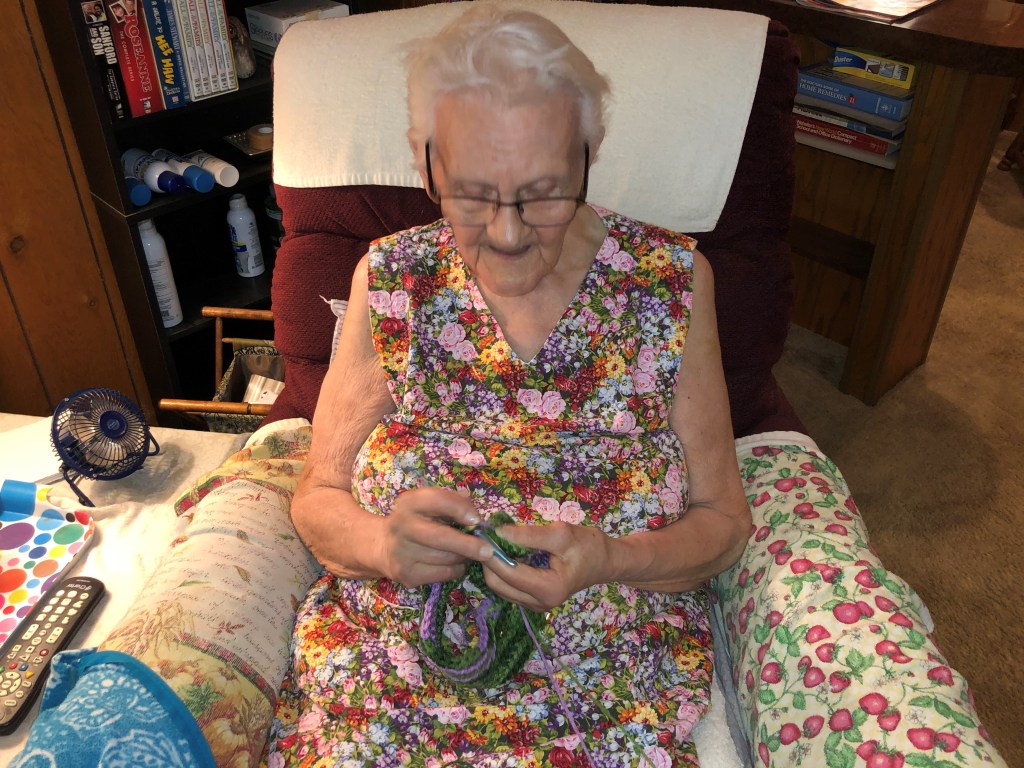
Su nombre es Ila Kole de 93 años, viven en Holland, Michigan y se dedica a hacer gorros de invierno, los cuales dona a personas de escasos recursos. Pero lo que hace esto una actividad digna de admirarse es que ella misma no tiene mucho dinero.

Ila Kole, en su casa en Holland, Michiga,

Ila vive en una casa muy pequeña, de las que acá llaman “trailers”, y el dinero que recibe de su pensión lo invierte en estambre que usa para la fabricación de los gorros. Yo personalmente le ayudo en la distribución de estos. Por algunos años he contactado iglesias, escuelas y programas en donde se han distribuido a personas de escasos recursos.

Además de haber donado gorros y bufandas en Michigan, Ohio, Missouri, Nueva York y Maine, también han llegado hasta Africa y México.

Los gorros son tan bonitos que podría fácilmente venderlos y hacer un buen negocio, pero Ila prefiere regalarlos.

Ella dice que lo hace para mantenerse ocupada, pero creo que la satisfacción de saber que hace algo que ayuda a la gente la mantiene motivada a seguir tejiendo.

Definitivamente Ila es un ejemplo a seguir, no solo por la ayuda que da a los más necesitados, sino porque siendo ella misma una persona que tiene poco, no pide más que saber a dónde y a quién llegan sus gorros y bufandas.

Sé que hay más personas que le ayudan a distribuir los gorros, pero al menos yo en el transcurso de unos 3 o 4 años he entregado a diferentes lugares más de 1,000 gorros. Desde gorritos para recién nacidos que fueron donados a algunos hospitales, hasta gorros de adultos de los cuales muchos de ellos fueron enviados al asilo de ancianos en mi querido Valles en México. Entre muchos otros lugares dentro de los Estados Unidos.

Ila tejiendo gorros.

Para mi es un privilegio poder ayudar a Ila en la distribución de los gorros y bufandas. Considero que nos da el ejemplo y nos enseña que no se necesita mucho para ayudar a los demás. Así que como ven, también pasan cosas buenas…de este lado del muro.

ENGLISH TRANSLATION

Today I want to write about a woman that I consider an example of life and goodness. I’ve only seen her once, but it was enough to know that she would be someone special to me.

Her name is Ila Kole, she is 93 years old, she lives in Holland, Michigan and makes winter hats, which she donates to people with limited resources. But what makes this an activity worthy of admiration is that she herself does not have much money.

Ila lives in a very small house, the kind we call “trailers”, and the money she receives from her pension is invested in yarn that she uses to make the hats. I personally help her in the distribution of these. For some years I have contacted churches, schools, and programs where they have been distributed to poor people.

In addition to donating hats and scarves in Michigan, Ohio, Missouri, New York, and Maine, they have also reached Africa and Mexico.

The hats are so pretty she could easily sell them and a little busines of it, but Ila prefers to give them away.

She says she does it to keep herself busy, but I think the satisfaction of knowing that she does something that helps people keeps her motivated to keep knitting.

Ila is an example to follow, not only because of the help she gives to those most in need, but because being herself a person who has very little, she asks nothing more than to know where and to whom her hats and scarves arrive.

I know there are more people helping her distribute the hats, but just me, at least I have delivered over 1,000 hats to different locations over the course of 3-4 years. From newborn hats that were donated to some hospitals, to adult hats, many of which were sent to the nursing home in my beloved Valles in Mexico. Among many other places within the United States.

For me it is a privilege to be able to help Ila with the distribution of the hats and scarves. I think he sets an example and teaches us that it does not take much to help others. So, as you can see, good things also happen … on this side of the wall.

Mexican celebrations…endless!

One of the things I miss the most about Mexico, is the way we celebrate our holidays. A very good example of this is Christmas, which is not celebrated on the 25th but on December 24th. At this point, we can confidently state that we are not done celebrating the birth of baby Jesus. 

In reality, Christmas celebrations in Mexico starts on December 16th with “Las Posadas,” which in English means a shelter or an inn. There are nine days before the 24th where people get together, sing and pray the rosary. There is a reenactment of Mary and Joseph’s journey to Bethlehem, (in Spanish we will say Belém) in search of a shelter where Mary could give birth to baby Jesus. 

These nine days symbolize the nine months of Mary’s pregnancy. Most houses in Mexico have a nativity scene, which is very important because it houses the manger in which baby Jesus will rest on the 24th, the day he was born. 

Las Posadas occur within a group of friends and family. Every night for nine nights, the families take turns preparing food that includes tamales, atole, and snacks which will be offered to the participants in the celebration. The attendees sing Christmas carols and pray the rosary and on the 24th each family places the baby Jesus in the nativity scene. 

Some posadas are more religious than others. Some people invite only friends and called it a Posada, where not praying or singing happens, but only food is offered and music is played. 

Unlike the United States, Christmas’ Eve in Mexico, called “Noche Buena”, starts around 8 pm when families gather and dinner is served at 11 pm. Friends do not need invitation so they can show up around dinner time or later. The Christmas celebration could last until early the next morning. It is very common to go from one house to another if one party ends earlier. 

The 25th is a pajama day and people open gifts and eat “el recalentado” or leftovers. On New Year’s Eve a similar celebration occurs, but it is geared towards celebrating with friends. People get together and party all night long. I never attended a party in Mexico that lasted less than 4 or 5 hours. In Mexico it is considered rude to tell people when the party is over or how long they can be in your house. We] say, “hasta que el cuerpo aguante,” or until the body resists.

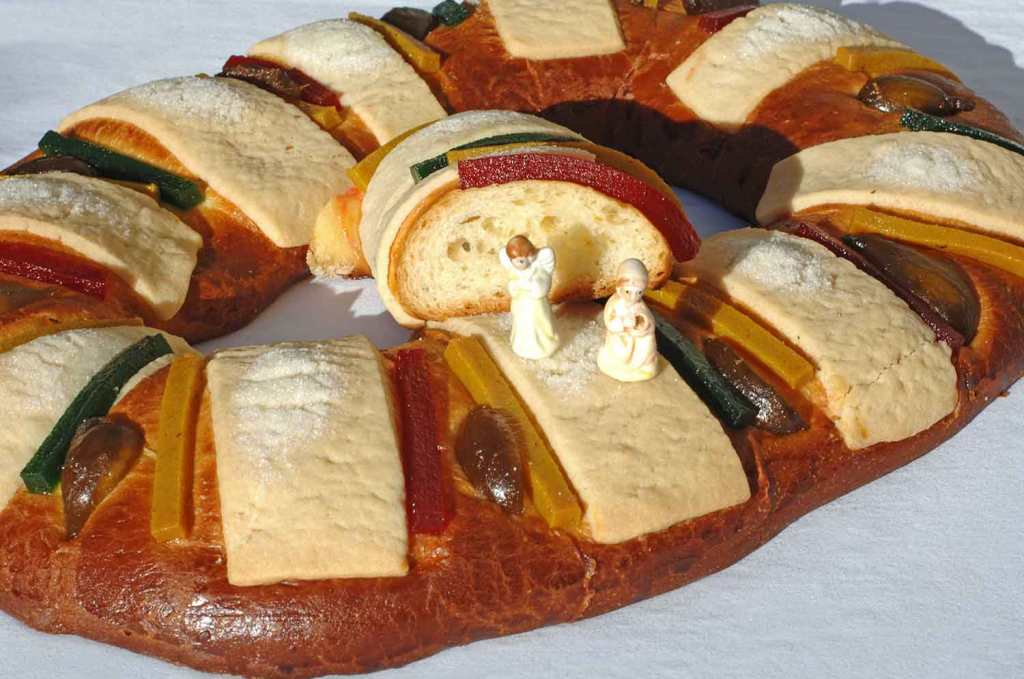
Then, on January 6th, we have Three Kings Day or The Three Wise Men. Kids receive a little gift and people get together to eat atole and Rosca de Reyes or King’s bread. This bread looks like a Kings crown and has a few little plastic Baby Jesus figurines hidden inside. The person that gets a slide with a hidden baby inside has to pay for or make tamales for everyone on February 2nd, called Candles Day. And then again, a small gathering takes place to celebrate the “dia de la Candelaria” or Candles day. 

Another unique aspect of these celebration that is different in Mexico as opposed to the United States is that people never (that I know) move dates around to celebrate. If a family member cannot make it on December 24th the family will still celebrate without that person. Also, there is no celebration at noon on Christmas Day. I am now used to the American way of celebrating the holidays and I am used to it, but I sometimes wish I could be there, in the other side of the wall.

Las celebraciones mexicanas…eternas.

Una de las cosas que más extraño de México es la forma en que celebramos nuestras fiestas. Un muy buen ejemplo de esto es la Navidad, que no se celebra el 25 sino el 24 de diciembre. Al día de hoy, podemos afirmar con confianza que no hemos terminado de celebrar el nacimiento del niño Jesús.

En realidad, las celebraciones navideñas en México comienzan el 16 de diciembre con “Las Posadas”. Hay nueve días antes del 24 donde la gente se reúne, canta y reza el rosario. Hay una recreación del viaje de María y José a Belén en busca de un refugio donde María pudiera dar a luz al niño Jesús.

Estos nueve días simbolizan los nueve meses del embarazo de María. La mayoría de las casas en México tienen un nacimiento, lo cual es muy importante porque alberga el pesebre en el que reposará el niño Jesús el día 24, día en que nació.

Las Posadas ocurren dentro de un grupo de amigos y familiares. Cada noche durante nueve noches, las familias se turnan para preparar alimentos que incluyen tamales, atole y botanas que se ofrecerán a los participantes en la celebración. Los asistentes cantan villancicos y rezan el rosario y el día 24 cada familia coloca al niño Jesús en el pesebre.

Algunas posadas son más religiosas que otras. Algunas personas invitan solo a amigos y lo llaman posada, donde no se ora ni se canta, sino que solo se ofrece comida y se toca música.

A diferencia de los Estados Unidos, la Nochebuena en México, comienza alrededor de las 8 pm cuando las familias se reúnen y la cena se sirve a las 11 pm. Los amigos no necesitan invitación para poder presentarse a la hora de la cena o más tarde. La celebración de Navidad podría durar hasta la mañana siguiente. Es muy común ir de una casa a otra si una fiesta termina antes.

El 25 es día de flojera y la gente abre los regalos y come el recalentado. En la víspera de Año Nuevo ocurre una celebración similar, pero está orientada a celebrar con amigos. La gente se junta y se divierte toda la noche. Nunca asistí a una fiesta en México que durara menos de 4 o 5 horas. En México se considera de mala educación decirle a la gente cuándo termina la fiesta o cuánto tiempo pueden estar en tu casa. Decimos, “hasta que el cuerpo aguante”.

Luego, el 6 de enero, tenemos el Día de los Reyes Magos. Los niños reciben un regalito y la gente se junta para comer atole y Rosca de Reyes. Este pan parece una corona de reyes y tiene algunas figuritas de plástico del Niño Jesús escondidas en su interior. La persona que recibe un pedazo con un bebé escondido adentro tiene que pagar o hacer tamales para todos el 2 de febrero, el día de la Candelaria.

Otro aspecto único de estas celebraciones que es diferente en México en comparación con los Estados Unidos es que la gente nunca (que yo sepa) se mueve en fechas para celebrar. Si un miembro de la familia no puede asistir el 24 de diciembre, la familia celebra sin esa persona. Además, no hay celebración al mediodía. Ahora estoy acostumbrada a la forma estadounidense de celebrar las fiestas y estoy acostumbrada, pero a veces desearía poder estar allí, de aquel lado del muro.

Enseñando en los meses del COVID-19

GOOGLE TRANSLATION AT THE BOTTOM OF THE SPANISH ARTICLE.

Muchos me preguntan cómo me fue el año pasado enseñando en los meses del COVID, lo que pueda yo contar no creo que refleje las condiciones en las que miles de maestros estamos trabajando, pero haré mi mejor esfuerzo para no caer en el drama y ser lo más positiva posible.

Aunque en muchas escuelas del país empezaron las clases en línea, nuestro distrito escolar empezó clases presenciales con opción a clases en línea. Esto es porque en los Estados Unidos las escuelas funcionan por distritos escolares y toman decisiones de manera independiente.

Así que desde agosto hemos estado trabajando con la gran mayoría de los estudiantes en el salón de clase, usando cubrebocas, gel antibacterial y tratando de mantener una distancia que es imposible, por el tamaño de los salones y el número de estudiantes en ellos. Sobre todo, porque muchos estudiantes no sienten que el COVID es algo que los pueda matar.

En realidad, esto es lo menos complicado de dar clases presenciales porque son las condiciones que podemos controlar. Lo que no se puede controlar son los maestros y estudiantes que han tenido que quedarse en la casa ya sea porque son COVID positivo y tuvieron contacto cercano con alguien que dio positivo. Entonces hay que enseñar no solo a los estudiantes que están tiempo completo en línea, sino que hay que producir material para los muchachos que se quedaron en sus casas dos semanas por estar en cuarentena, que no son en línea completamente y no están en la clase completamente, pero que no podemos dejar que se atrasen.

Estamos de acuerdo que, tanto enseñar como aprender en los tiempos de COVID es un reto, pero la cantidad de trabajo para los maestros y las expectativas se salen de la realidad, porque los estudiantes y los padres tuvieron la oportunidad de escoger, los maestros no. 

Sin embargo, debo decir que agradezco a mi distrito escolar haber abierto la escuela y darnos la oportunidad de tener el contacto físico con los muchachos, los cuales han sido muy super considerados y lindos. Y puedo decir esto tal vez porque soy una persona sana y deportista, pero según las estadísticas, 1 de cada 3 maestros han expresado que están pensando en renunciar o retirarse antes de tiempo.

Lo positivo que el COVID ha traído a la enseñanza es que ya es un hecho eso que desde hace años vivo escuchando: el “teaching on the 21st century” Enseñando en el siglo 21, pero no se nos habían dado las herramientas tecnológicas del siglo 21, las cuales con la pandemia finalmente han llegado.

Aprender nuevas tecnologías y habilidades porque antes nunca teníamos tiempo, y las escuelas ya nos están dotando de computadoras y equipo a los estudiantes y a los maestros porque, aunque no lo crean Estados Unidos también tiene pobres y zonas sin wifi.

En conclusión, que concuerdo en lo que dicen que, -literal- lo que no te mata te hace fuerte, y si no hemos aprendido algo durante estos meses de tantos desafíos, no hemos aprendido nada de la vida…para el mundo y  de este lado del muro.

Translation from Google translate.

Teaching in the months of COVID-19
Many ask me how I was teaching last year during the COVID months, what I can tell I do not think reflects the conditions in which thousands of teachers are working, but I will do my best not to fall into the drama and be as positive as possible.


Although online classes began in many schools across the country, our school district began face-to-face classes with the option of online classes. This is because schools in the United States are run by school districts and make decisions independently.

So since August we have been working with the vast majority of the students in the classroom, using face masks, antibacterial gel and trying to maintain a distance that is impossible, due to the size of the classrooms and the number of students in them. Above all, because many students do not feel that COVID is something that can kill them.

Actually, this is the least complicated of giving face-to-face classes because these are the conditions that we can control. What cannot be controlled are the teachers and students who have had to stay home either because they are COVID positive and had close contact with someone who tested positive. So you have to teach not only the students who are online full time, but you have to produce material for the guys who stayed at home for two weeks because they were quarantined, who are not fully online and are not in class. completely, but that we can’t let them get behind.

We agree that both teaching and learning in times of COVID is challenging, but the amount of work for teachers and expectations are unreal, students and parents had the opportunity to choose, teachers did not .
However, I must say that I am grateful to my school district for opening the school and giving us the opportunity to have physical contact with the boys, who have been very considerate and simply amazing, and I can say this maybe because I am a healthy and athletic person, but according to statistics, 1 in 3 teachers have expressed that they are thinking of quitting or retiring early.

The positive thing that COVID has brought to teaching is that what I have been hearing for years is already a fact: the “teaching on the 21st century” but we had not been given the technological tools of the 21st century , which with the pandemic have finally arrived.

Learn new technologies and skills because before we never had time, and schools are already providing computers and equipment to students and teachers because, believe it or not, the United States also has poor areas and areas without Wi-Fi.

In conclusion, I agree with what they say that, -literally- what does not kill you makes you strong, and if we have not learned something during these months of so many challenges, we have not learned anything about life … for the world, in this side of the wall.